Before a research idea can attract major funding, it needs evidence that it's worth pursuing.
Getting that evidence takes funding, too.
That's where the Foundation for Prader-Willi Research—and the people who donate and fundraise—make a difference.
In a recent conversation on the American Diabetes Association’s Diabetes Bio podcast, FPWR’s Director of Research Programs, Dr. Theresa Strong, explained how the Foundation helps promising ideas get started, how families are involved, and what progress means to her as a scientist and a parent.
Giving promising ideas a chance
Theresa described FPWR’s approach to supporting early research: fund bold, new ideas that may not yet be ready for larger grants from the National Institutes of Health (NIH), and help investigators answer an essential question: is this worth pursuing?
A new approach may have a strong scientific rationale, but researchers still need to test whether it works. Funding that initial work helps them gather evidence, identify obstacles, and determine next steps.
When the findings are promising, researchers can make the case for more funding to continue the work. When an approach does not work as hoped, the results still provide valuable answers. A donation can help a researcher test a question that might otherwise remain unanswered.
To see this support in action, explore seven research projects funded in FPWR’s first grant round of 2026.
Connecting early research to a larger effort
An initial grant is part of the support a research project needs. Scientists also depend on specialized equipment, technical expertise, and colleagues who bring different perspectives to a problem.
Theresa explained that many FPWR-supported investigators work within research centers where those resources are shared. Access to that infrastructure helps them accomplish work that a small foundation’s grant could not support on its own.
Philanthropic funding and a strong publicly funded research system play complementary roles. FPWR can help a new idea get started, while shared resources and opportunities for larger funding help researchers carry that work further.
Keeping families involved
Alongside funding and scientific expertise, research needs another essential perspective: the people living with PWS.
“Our community is very involved in our grant selection process,” Theresa said. “We have advocate reviewers.”
Community members contribute lived experience of PWS alongside the expertise of scientific reviewers. They understand the challenges that require constant planning, how symptoms affect daily life and independence, and which changes would make a meaningful difference.
That process keeps research grounded in the daily lives of the people it is intended to serve.
The daily demands of PWS
Theresa brings that lived experience to her own work. One of her twins has PWS, and she described the challenge of meeting two children’s very different food needs within the same household.
“It’s just really hard to constantly maintain that environment to keep a person with PWS at a healthy weight the whole time,” she said.
The demands of managing hyperphagia—the persistent, intense hunger associated with PWS—reach into nearly every part of daily life. Maintaining food security requires constant vigilance. When routines are disrupted, that level of control can become difficult to sustain, putting added strain on the entire household.
When food access cannot be safely managed, some community activities are simply out of reach for people with PWS.
These experiences explain why research matters so much to families. Better treatments could help people with PWS participate more fully in daily life and ease the demands on those who support them.
Moving research forward
Reflecting on the decades since her son’s diagnosis, Theresa described a field with more knowledge, more treatment possibilities, and reason for hope.
“It really is a much more hopeful environment than it was, you know, ten or twenty years ago.”
There is still much to understand, and families still need more options across the many challenges of PWS.
Continued research is essential to that progress.
Every person who donates, organizes a fundraiser, or asks others to support PWS research helps researchers test ideas, learn from the results, and take the next step toward meaningful treatments.
Help move PWS research forward. Make a donation or explore ways to fundraise.
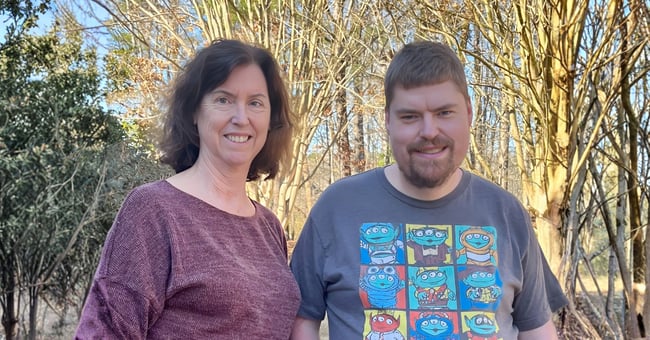
FPWR’s Dr. Theresa Strong with her son, Daniel, who lives with Prader-Willi syndrome.