
By Guest Blogger Tammy Galloway
I have started this story many times, and each time I find myself focusing on different parts of our journey. In the early days, doctors told us what my son Kyle would likely never do. They told us what to expect, and it was overwhelming. Over the years, those words stayed with us and shaped our expectations. But now, when I pause and look at our life, especially on a day that feels ordinary, I realize just how far we have come. Kyle recently attended a holiday event at his day program, something we had avoided in the past because gift exchanges and group events were too difficult. He used to struggle with anxiety, high expectations, and intense reactions when things did not go exactly as planned or how he imagined they would go. We stopped participating in events like these because they often ended in frustration and meltdowns. But this time, Kyle chose to participate.
The first challenge came with lunch. The program was ordering pizza, and Kyle can not eat pizza because of his type 2 diabetes. In the past, telling him he could not have something would not have been enough. But now, he understands his health in a way he did not before. He has learned to monitor his glucose levels and can see the impact of carbohydrates in real time. Instead of fighting the situation, he chose a healthier option on his own. He did not argue, bargain, or become upset.
In fact, he even took it a step further. He asked if he could bring a veggie tray to share, and he chose a sugar-free dessert that fit within his dietary needs. This was not only a sign of self-control but also a sign of empathy and social awareness. He was thinking about others, not just himself.
The gift exchange was another moment that could have gone badly. Kyle received a Mrs. Claus mug, and he was disappointed. In the past, this would have triggered a meltdown or intense frustration. But this time, he processed it differently. He talked through his feelings, and then he offered a solution. He said he would pair the mug with hot chocolate mix and candy canes and use it as a gift at another event. He did not react with anger. He did not shut down. He adapted.
Later that evening, more quiet victories continued. Kyle waited patiently to be picked up, even when I was running late. He did not panic or spiral. He managed the disappointment and uncertainty in a way that felt almost unimaginable compared to our past experiences. He also handled the smells and sights of a dinner he was not eating without becoming upset. He remained calm.
When it came time to spend money he had received from his grandmother, he surprised us again. Instead of demanding to spend it immediately, he waited. He researched his options, compared prices, and created a list to rank what he wanted most. When I suggested buying one game at a time, he agreed without arguing. He showed the ability to think ahead and make a thoughtful decision.
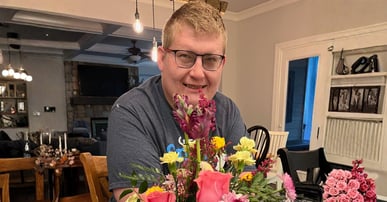 As he walked away to his game room, he stopped to say goodnight to his grandfather and told him he looked forward to seeing him again soon. In that moment, I realized how easy it is to get caught up in the daily demands of caregiving and forget to recognize the progress happening right in front of us.
So how did we get from intense meltdowns and constant frustration to this calmer, more level-headed version of Kyle?
I cannot point to just one thing. It is likely a combination of many factors: medications, new therapies, consistent support, behavioral coaching, community access services, and time. It could also be maturity and the natural growth that comes with age. But no matter the reason, the progress is real.
Living with Prader-Willi syndrome is a long journey, and some days are still hard. But days like this remind me that change is possible.
Hope is not always loud or dramatic.
Sometimes it is quiet. Sometimes it is a calm response where chaos once lived. And sometimes, it is simply realizing that what we once thought impossible has become part of our everyday life.