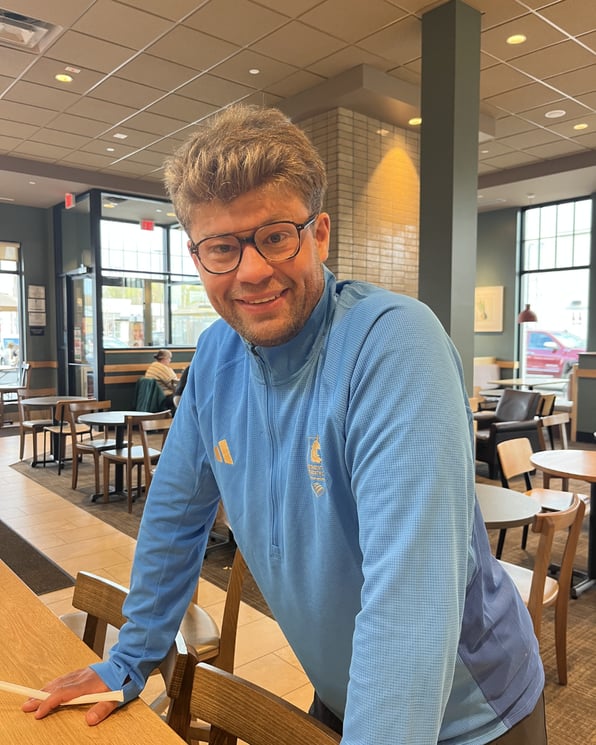
Finn Schneider has crossed some remarkable finish lines, including the Boston Marathon and a full Ironman.
When he spoke at the 2026 FPWR conference, he also talked about everything that helped him get there: finding something he loves, navigating setbacks, and building the support he needs to pursue his goals.
His message to families was personal and practical. Each person with Prader-Willi syndrome has their own interests and ambitions. Finding the right support can help create opportunities to explore them.
In a conversation with FPWR Executive Director Susan Hedstrom, Finn shared what supported independence looks like in his life. Then he took a turn asking the questions, interviewing FPWR co-founder Dr. Theresa Strong about her son Daniel and her hopes for the future of PWS research.
Watch their conversation below.
Finding what brings him joy
For Finn, being outdoors and training for endurance events brings happiness, purpose, and opportunities to challenge himself.
He described setting a goal to qualify for Boston, achieving it, and running the Boston Marathon the following spring. He went on to complete a full Ironman: a 2.4-mile swim, a 112-mile bike ride, and a marathon. At the time of the conference, he was preparing for the New York City Marathon with Team FPWR and raising funds for PWS research.
Those accomplishments reflect years of encouragement and training. Finn’s family introduced him to activity early, and he began swimming at age four. His mother, a professional triathlete, helped shape his love of being active.
He encouraged families to give their children opportunities to discover what brings them happiness, and to recognize that their dreams may look different from his.
“Their dreams may be different from mine, but their dreams are possible. You just have to keep trying to find the right support.”
Independence takes the right support
Finn was candid about the challenges of finding a living situation that worked for him.
He described enjoying life in a community where he worked on a farm and built relationships. When people left and his support system changed, he experienced setbacks and eventually needed to move.
“For me, when I don’t have the support that I need, I am not successful,” he explained.
Today, Finn lives in his own apartment, with shared living providers upstairs. They join him for meals and provide ingredients so he can prepare breakfast and lunch. They also offer encouragement, companionship, and support for his training and health.
His service dog, Toby, has been another important part of finding a life that works for him.
Finn’s account makes supported independence concrete. His daily life includes help with specific needs alongside opportunities to make meals, train, pursue goals, and be the person he wants to be.
He encouraged families to keep looking for the right fit, including when an earlier arrangement no longer works.
Asking what research could make possible
When Finn turned interviewer, he asked Theresa about Daniel, her adult son with PWS.
She described Daniel as someone who loves football, golfing with his dad, running neighborhood 5Ks, and joining family conversations. PWS presents real challenges, she emphasized, but it does not describe the whole person.
Finn then asked what she had wished existed when Daniel was diagnosed, and how that led to FPWR.
Theresa explained that she wanted treatments that could help people with PWS pursue the things they wanted to do. Her science background, combined with conversations with other parents, helped lead to the foundation’s creation.
That purpose is personal. Like Finn, Daniel has things he wants to do, and PWS can put barriers in his way. Theresa wants research and new treatments to help make that path smoother.
She also described the collaboration taking place at the conference: researchers sharing findings, clinicians discussing care, and clinical trial partners working to improve studies. A family panel at the scientific meeting gave researchers an opportunity to hear directly about life with PWS and families’ priorities.
Finn’s questions brought those efforts back to the people they are intended to help.
Making room for each person’s future
Asked what he hopes for the future, Finn called for more research and greater understanding of PWS. He wants people to have opportunities to join programs, build friendships, find work, participate in athletics, and live with appropriate support.
He also reminded families that every individual is different. There will be bumps in the road, and it takes time to discover who a child will become.
Theresa offered a related reflection for parents early in their journey: seek information and support, but leave room to enjoy the child in front of you. “I wish that I had focused more on just enjoying my baby and not worried so much,” Theresa shared.
Together, their conversation held space for both the challenges of PWS and the lives people want to build. Finn shared what has helped him pursue his goals.
Theresa described why expanding those possibilities through research matters so deeply.
Help move research toward more possibilities for people with PWS. Explore ways to get involved with FPWR.