
Skin picking is a common and challenging behavior seen in people with Prader-Willi syndrome (PWS), and for many families, it can be incredibly distressing.
A small scratch, scab, or bug bite can quickly turn into a wound that is difficult to heal because the individual repeatedly picks at the same spot. In severe cases, skin picking can lead to infection, scarring, or medical complications.
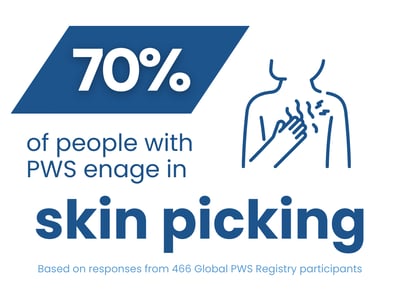
Research supported by FPWR and data from the Global PWS Registry show that skin picking in Prader-Willi syndrome affects the majority of individuals with the condition, often beginning in childhood and continuing, sometimes on and off, throughout life.
While there is currently no complete cure for skin picking, researchers and clinicians have identified several approaches that may help.
How Common Is Skin Picking in Prader-Willi Syndrome?
Skin picking is extremely common among individuals with PWS. Data from the Global PWS Registry shows:
- Many begin the behavior before age 5
- Over 70% have begun skin picking by age 10
- For many individuals, picking occurs daily or multiple times per day
Previous studies have shown that those individuals with the deletion subtype may be more prone to picking than UPD (90% versus 70%).
In an FPWR-funded project examining skin picking, Dr. Scott Hall evaluated 55 individuals with PWS aged 6 to 25. 87% of participants had active skin injuries caused by behaviors such as scratching, rubbing, biting, or puncturing the skin, and on average, individuals in the study had between five and eight active injuries at a time.
These injuries were most commonly found on areas that were easily accessible for repeated picking, such as:
- Arms and legs
- Hands and feet
- Scalp, face, and neck
The behavior often starts with a small trigger, such as:
- Dry or irritated skin
- Bug bites
- Scabs or scratches
- Acne or small skin bumps
Once picking begins, it can be very difficult for the individual to stop, even when the wound becomes painful or infected.
The Consequences of Skin Picking
For many individuals with Prader-Willi syndrome, skin picking is more than a minor habit—it can have significant physical consequences.
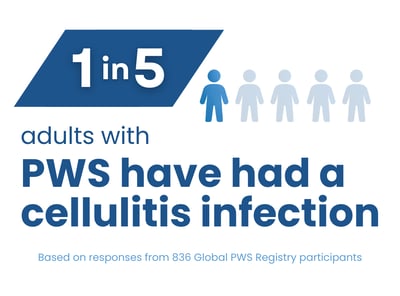
Caregiver reports from research studies indicate that many children with PWS experience recurrent infections and scarring as a result of repeated skin injuries. Because wounds are often reopened through continued picking, healing can be slow and difficult.
In approximately 10–15% of cases, skin picking can lead to deep wounds or noticeable disfigurement. In some cases, infections become severe enough to require medical treatment or hospitalization.
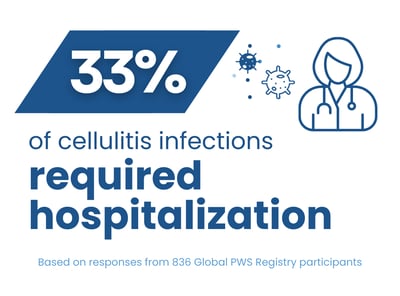
These complications highlight why early intervention and prevention strategies are so important. Protecting the skin, addressing triggers, and working with healthcare providers to explore behavioral or medical treatments can help reduce the risk of serious injury.
Why Do Individuals with Prader-Willi Syndrome Pick Their Skin?
Skin picking in PWS is complex—and often driven by a mix of biological, sensory, and emotional factors. Research suggests a variety of possible reasons causing individuals with PWS to engage in this challenging behavior.
Compulsive or repetitive behavior
For some individuals, skin picking is similar to compulsive behaviors seen in OCD. There can be a strong, persistent urge to pick that’s hard to resist—even when they want to stop.
Sensory stimulation
Studies suggest that skin picking may provide automatic sensory stimulation, meaning the behavior itself can feel rewarding or calming. Research by Dr. Scott Hall at Stanford University found that about half of skin-picking behaviors were linked to sensory stimulation.
Caregiver reports also suggest that skin picking often occurs during periods of low stimulation. In one study, more than half of caregivers reported that their child commonly picked their skin while at school, while waiting, while watching television, while riding in the car, or while lying in bed—situations where there may be less structured activity or engagement.
Attention or access to preferred activities
In the same study, approximately 35% of participants appeared to engage in skin picking to gain attention or access to a preferred item or activity.
Anxiety, boredom, or stress
Episodes of skin picking may increase during periods of:
- Anxiety
- Stress
- Frustration
- Boredom or lack of stimulation
Reduced pain sensitivity
Many individuals with PWS have a higher tolerance for pain, which may allow picking behaviors to continue longer than they might in other individuals.
Brain-based differences
Researchers are studying how differences in brain circuitry in PWS may contribute to repetitive behaviors such as skin picking. Identifying these mechanisms could lead to more targeted treatments in the future.
Strategies to Reduce Skin Picking
Because skin picking has multiple causes, most families find that a combination of approaches works best.
Reduce Triggers
- Maintain structured routines
- Provide engaging activities to reduce boredom
- Redirection when picking begins
- Environmental enrichment and structured activities
- Limiting access to wounds
Provide sensory alternatives
Some families find that alternative sensory stimulation can help redirect the urge to pick, including:
- Fidget toys
- Stress balls
- Textured objects
- Craft activities such as diamond painting, beading, or clay
- Chewing gum or other oral sensory activities
Medications That May Help Skin Picking in PWS
There is currently no FDA-approved medication specifically for skin picking in Prader-Willi syndrome, but several treatments have shown promise.
Topiramate (Topamax)
Topiramate (Topamax) is an anti-seizure medication that has been explored for reducing self-injurious behaviors, including skin picking.
Some clinical reports suggest that topiramate may reduce repetitive or compulsive behaviors in certain individuals with PWS, though results are mixed and additional research is needed.
In one open-label study of 7 adult patients with PWS, treatment with topiramate led to reductions in self-injury and healing of skin lesions (Smathers et al., 2003).
Because the medication can have side effects such as cognitive slowing or appetite changes, careful monitoring by a physician is important.
Guanfacine – extended release (GXR)
Guanfacine, formerly named Intuniv and now available in generic form, is a non-stimulant prescription medication used to treat ADHD.
Guanfacine has been explored as a medication to treat aggression and skin picking in PWS. In a recent controlled clinical trial evaluating GXR in individuals with PWS, age 6-35 years old, showed a reduction in skin picking among participants receiving GXR compared to placebo, although the reduction did not reach statistical significance. Nonetheless, for individuals with PWS who show aggression, inattention/hyperactivity, and skin picking, families may want to consider a trial of GXR.
N-Acetylcysteine (NAC)
PharmaNAC is an over-the-counter formulation of N-acetylcysteine (NAC). The use of Pharma-NAC for treating skin-picking is based on research showing that one of the contributing factors to obsessive-compulsive behaviors is dysregulation of the glutamate pathway. Glutamate is a neurotransmitter that works by activating NMDA glutamate receptors and Pharma-NAC may restore balance to this important pathway.
A 2013 study, conducted by Dr. Miller and Dr. Angulo at the University of Florida, examined PharmaNac treatment in 35 individuals with PWS between the ages of 5 and 39 who had persistent skin picking for at least one year. (Miller et al., 2013).
After 12 weeks of treatment with PharmaNAC:
- All 35 participants experienced significant improvement in skin-picking behavior
- More than 70% had complete resolution of skin picking
- Only two individuals reported mild gastrointestinal side effects
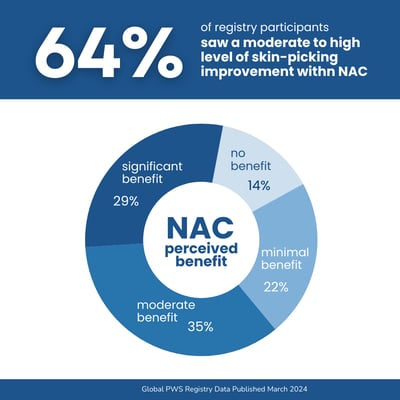
Data from the Global PWS Registry further supports the use of NAC for skin picking in PWS. More than half of registry participants who have tried NAC have reported moderate to significant benefit in reducing the severity of skin picking.
However, another study using a different formulation of NAC showed only limited improvements in skin picking for 14 individuals treated using NAC, with six patients showing some improvement, six showing no change, and two patients experiencing more skin picking. (Wieting et al 2022)
If you are considering NAC for your loved one, please consult with your physician. Also note that not every formulation of NAC is the same, so some brands may work differently from others. Packaging that reduces exposure to the air may be helpful in preventing the degradation of the NAC.
Physical Strategies to Prevent Skin Picking
In addition to behavioral strategies and medication, protecting the skin and preventing triggers is often one of the most effective ways to reduce skin picking.
Maintain healthy skin
- Moisturize dry skin regularly
- Treat insect bites promptly
- Cover scratches, cuts, and scabs before they become targets
Protect wounds and healing skin
- Cover wounds with bandages or hydrocolloid dressings
- Use long sleeves or compression garments
- Apply finger bandages or gloves if fingers are used to pick
- Keep fingernails trimmed short
Practical Tips From Parents
Busy hands help
We created a few “busy hands bags” that have a variety of fidget toys. We also keep band-aids on us at all times, and I put a pair of clippers in a few different places so we have easy access to snip the dry skin she’s picking at. — Valerie, mom to Isla, 9
Protect the skin first
Dry, itchy skin is a big contributor. Anything we can do to combat that while also keeping things wrapped and covered is helpful. — Shandra, mom to Emile, 23
Nail polish changed everything
Our son was an aggressive toenail picker and would even rip his toenails off. A couple of years ago, we gave him a pedicure and allowed him to choose his nail polish. He hasn't touched his toes since! — Dan, dad to Jayden, 17
In school, they have my daughter wear sparkle gloves, and chew fidgets as necklaces. — Joanne, mom to Julia, 10
Layer simple barriers
Lots of lotion, chapstick, clothing barriers, and covering spots with band-aids. — Michelle, mom to Samantha, 7
Use compression
We have had some success with compression sleeves as a barrier. — Tammy, mom to Kyle, 28
Reward + redirect
My daughter has always responded very well to sticker charts. I also keep a small clipper on my key ring to remove loose skin and fidget toys so she has something to do with her hands! — Hayley, mom to Josie, 10
Key Takeaways for Families
- Skin picking affects most individuals with Prader-Willi syndrome.
- It may be driven by sensory stimulation, compulsive behavior, and environmental triggers.
- Behavioral strategies and skin protection remain the most common management approaches.
- Medications such as NAC and topiramate may help some individuals, though responses vary.
Sources & References
Foundation for Prader-Willi Research:
-
Global Prader-Willi Syndrome Registry data on skin picking behaviors.
-
A Preliminary Analysis of the Phenomenology of Skin Picking in Youth with PWS
Publications:
-
An analysis of the topography, severity, potential sources of reinforcement, and treatments utilized for skin picking in Prader–Willi syndrome. Hall, S. S., Lightbody, A. A., Hirt, M., Rezvani, A., & Reiss, A. L. (2013). Research in Developmental Disabilities.
-
Case series of behavioral psychotherapy for obsessive-compulsive symptoms in youth with Prader-Willi syndrome. Storch EA, Rahman O, Morgan J Brauer L, Miller J & Murphy T. (2011) Journal of Development and Physical Disabilities.
-
A preliminary analysis of the phenomenology of skin-picking in Prader-Willi syndrome. Morgan JR, Storch EA, Woods DW, Bodzin D, Lewin AB, Murphy TK. (2010) Child Psychiatry and Human Development.
-
Topiramate effectiveness in Prader–Willi syndrome. Smathers, S. A., Wilson, J. G., & Nigro, M. A. (2003). Journal of Child Neurology.
-
A Randomized Double-Blind Placebo-Controlled Trial of Guanfacine Extended Release for Aggression and Self-Injurious Behavior Associated With Prader-Willi Syndrome. Singh D, Silver M, Jacob T. (2025) Am J Med Genet B Neuropsychiatr Genet.
-
An open-label pilot study of N-acetylcysteine for skin picking in Prader–Willi syndrome. Miller, J. L., & Angulo, M. (2013). American Journal of Medical Genetics Part A.
-
N-Acetylcysteine provides limited efficacy as a treatment option for skin picking in Prader-Willi syndrome. Wieting J, Deest M, Bleich S, Frieling H, Eberlein C. (2022) A J Med Genet.
This article is intended for informational purposes only and should not be considered medical advice. Families should consult their physician before starting or changing any medication or treatment.