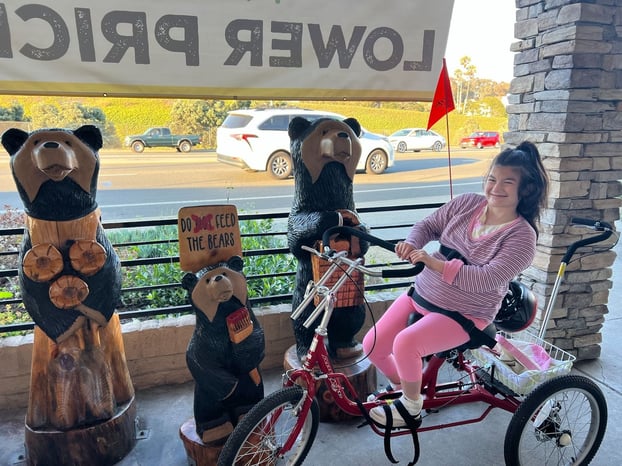
Alia is our youngest of four. We moved back to Los Angeles from San Francisco while pregnant with her, full of excitement for adding another Pesce to the pond. We had no reason to expect anything out of the ordinary — until, shortly after she was born, we learned she was in respiratory distress and could feel the seriousness in the room. What began as a moment of uncertainty quickly became the start of a journey that would shape our family in ways we never imagined.
NICU and Diagnosis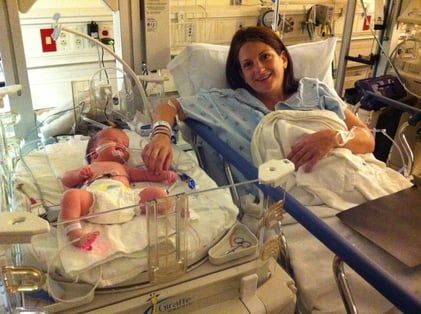
Alia was immediately sent to the NICU and was there for 2 months, or what seemed like an eternity. Off and on the ventilator over the two months and feeding tube dependent. We are forever grateful for our family, friends, doctors, nurses and staff that helped us get through such a challenging time in our lives. Those were long days, lots of ups and downs, but she is a fighter - always has been.
And then on July 11th, 2012, we were finally able to take her home. She was sent home with a feeding tube, a very fragile respiratory system and critical meds that were required daily. We were not given a diagnosis, but rather a prognosis that she likely would never walk, talk or eat on her own. We began working with geneticists around the country, doing whole genome sequencing, and anything else we could to try to identify what she had.
At this time Schaaf-Yang Syndrome had not been identified so we ran into many dead ends. Years after she was born, our geneticist from UCLA referred us to the Undiagnosed Diseases Network (UDN), a research study funded by the NIH, whose purpose is to bring together clinical and research experts from across the US to solve the most challenging medical mysteries using advanced technologies. The UDN accepted our application in January 2017 and later that year, after her 5th birthday, they were able to confirm her diagnosis of Schaaf-Yang Syndrome. It was first identified in 2013 by Dr. Christian Schaaf and Dr. Yaping Yang.
One in a Million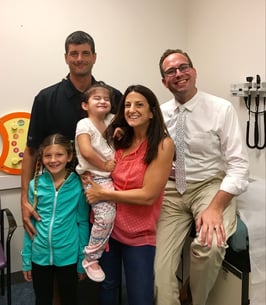
Schaaf-Yang Syndrome (SYS) is a rare genetic disorder that affects various aspects of development, including intellectual ability, physical growth, and behavior. It is caused by a mutation or deletion of the MAGEL2 gene on chromosome 15q11-13, which is involved in the regulation of gene expression and brain development.
The disrupted gene causing Schaaf-Yang syndrome is also missing in another, more common sister disorder, Prader-Willi syndrome. PWS is caused when MAGEL2 and several additional genes on chromosome 15 are missing or inactivated. SYS can now be identified in prenatal testing.
The syndrome is estimated to have a prevalence of less than 1 in 1,000,000.
Alia is the 96th person in the world to have been diagnosed with Schaaf-Yang Syndrome.
As of 2024, over 300 individuals worldwide have been diagnosed with SYS.
And so our journey began... While having a diagnosis is helpful, it’s not the end goal. Our focus now is to find a cure! The Schaaf-Yang Syndrome research supported by the Foundation for Prader-Willi Research (FPWR) aims to understand the rare MAGEL2 gene mutation, develop targeted therapies, and find treatments!
Bike for Bear
Bike for Bear is what we hope becomes an annual tradition—celebrating Alia’s birthday, her achievements, and just how far she’s come.
It’s a day rooted in joy, but also in purpose.
Through this event, we’re raising awareness and, most importantly, funding research that will benefit both the Schaaf-Yang and Prader-Willi communities. Researchers like Dr. Schaaf and his team in Heidelberg are working hard to better understand SYS—studying the MAGEL2 gene, brain development, and potential therapies that could truly change lives.
All proceeds raised through this event will go directly to the Schaaf-Yang Foundation whose research accelerates the understanding of SYS and whose primary goal is to develop therapies to manage symptoms like intellectual disability, autism, feeding issues, and muscle weakness, with a long-term aim of finding a cure!
👉 Join us for Bike for Bear or make a gift to support SYS research.
Every dollar moves us closer to better treatments—and more possibilities for Alia and others like her.