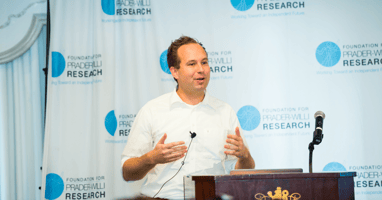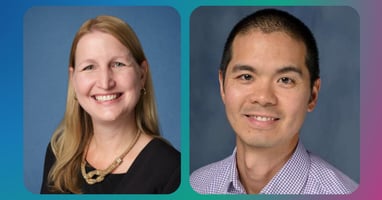

In a recent research update video from the United in Hope 2025 Conference, scientists from Heidelberg University—Dr. Rachel Gilmore, Dr. Ferdinand Althammer, Felix Franke, and Tim Schubert—shared exciting progress from their FPWR-funded studies focus...
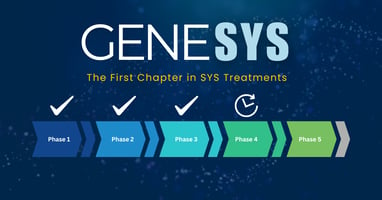
What if we could target the very root of Schaaf-Yang Syndrome (SYS) and dramatically change the trajectory of this condition? With the launch of GeneSYS, the Foundation for Prader-Willi Research is taking a bold leap in that direction.
For families exploring growth hormone therapy for loved ones with SYS, a 2021 study by Hebach et al. offers helpful insight.
What if the key to treating a rare genetic condition lies not just in whether a protein is present—but in where it ends up inside the cell? This is the case with the MAGEL2 protein, which plays a critical role in cell function and is missing or alter...
A special blog contribution from Roya Malaekeh. People often ask what it was like getting a diagnosis, especially since we had endured a year without one. When I got that phone call from the geneticist, it felt like a boulder was lifted off my chest ...
What does the MAGEL2 gene actually do in the brain—and how does its dysfunction lead to the symptoms we see in Schaaf-Yang syndrome (SYS)?
FPWR is pleased to announce the launch of the Global Schaaf-Yang Syndrome Registry, an online registry for individuals with Schaaf-Yang syndrome (SYS) and their parents/caregivers.
A special blog contribution from Stephanie McDade. Last week Gibson rode a tricycle. She pedaled and steered on her own for a good five minutes on the sidewalk of our city block. This is real progress for a 8-year-old who doesn’t walk independently a...
A special contribution by guest blogger Leslie Born “No degree, or training, or book, or conversation, could have ever prepared me to be the parent of a child with a disability.” – Amanda Griffith-Atkins These words ring so true that some days I can’...
In 2014, when Emma Nelson was born, NICU staff told her parents, Kim and Justin, to prepare for the worst. But for the next two years, Emma had no diagnosis. Kim and Justin were directed from one specialist to the next trying to find answers to their...