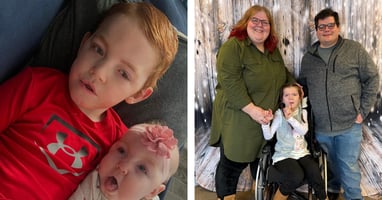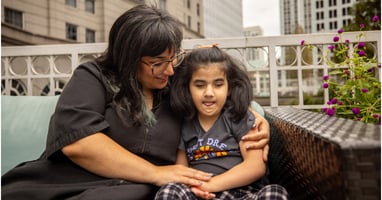
Alia is our youngest of four. We moved back to Los Angeles from San Francisco while pregnant with her, full of excitement for adding another Pesce to the pond. We had no reason to expect anything out of the ordinary — until, shortly after she was bor...
Join us October 9–10 in Philadelphia for the annual FPWR Family Conference, a unique gathering dedicated to families and professionals affected by Schaaf-Yang syndrome. Over two powerful days, leading researchers, clinicians, and families from around...
With February 28 marking Rare Disease Day, we honor the courage, joy, and resilience of families living with Schaaf-Yang Syndrome (SYS). It’s a day to raise awareness, celebrate progress, and highlight the critical need for research and support for c...
During the recent GeneSYS Update Town Hall, FPWR shared encouraging progress on the GeneSYS project, a research initiative focused on developing a targeted therapeutic approach for Schaaf-Yang syndrome (SYS). While this work is still in the early sta...
Understanding the science behind Schaaf-Yang Syndrome (SYS) can feel overwhelming—but you don’t need to be a scientist to make sense of it. Here’s a clear, family-friendly glossary of key terms you may encounter when learning about SYS, research, or ...
Interest in oxytocin as a possible treatment for Schaaf-Yang syndrome (SYS) has been growing in recent years. To help clarify what is currently known, Dr. Christian Schaaf, whose research first identified the MAGEL2 gene changes that cause SYS, share...
When Kim Fonseca began thinking about how to celebrate her daughter Lyla’s birthday this year, she knew two things for certain: she wanted it to be simple, and she wanted it to matter. Life with Schaaf-Yang syndrome (SYS) brings intense days — therap...
The GeneSYS project continues to make meaningful progress toward a targeted treatment for Schaaf-Yang Syndrome (SYS), a rare genetic condition caused by a mutation in the MAGEL2 gene. While there is still important work ahead, recent developments are...
When it comes to rare conditions like Schaaf-Yang syndrome (SYS), every story has value. Each symptom, milestone, and lived experience helps deepen our understanding of SYS and strengthens the foundation for better care, support, and future treatment...
Biorepositories play a crucial role in rare disease research, acting as central locations to collect, store, and distribute samples such as tissues, blood, and cells. The Foundation for Prader-Willi Research, in partnership with COMBINEDBrain, has es...