If your loved one has Prader-Willi syndrome (PWS), you know how important expert medical care is to managing the complexities of the condition. The good news is that a dedicated group of doctors has partnered with FPWR to create a nationwide network of PWS experts: the PWS Clinical Investigation Collaborative, or PWS-CLIC.
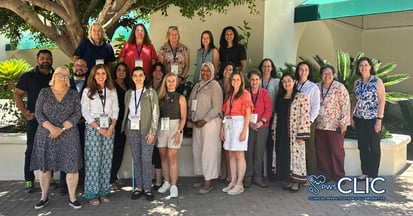
Formally established in 2021 with support from FPWR, the PWS-CLIC brings together clinical experts across the United States and Canada who are committed to improving care and advancing research for people with PWS across the lifespan.
What Is the PWS-CLIC?
The PWS-CLIC is a community of clinical experts who work together to better understand PWS and share knowledge across sites. By pooling their expertise, these clinicians aim to:
-
Identify and answer important clinical questions about PWS care
-
Share real-world patient information across clinics
-
Develop evidence-based treatments and guidelines
-
Improve medical care for individuals with PWS, no matter their age
A key part of this effort is a shared, de-identified clinical database that helps clinicians learn from real-world patient care across multiple sites.
Why Should You Seek Care from a PWS-CLIC Physician?
When your child receives care from a PWS-CLIC physician, they benefit from a direct connection to the latest research in PWS. These doctors are actively involved in clinical studies and ongoing data collection, helping ensure that care is informed by the most current understanding of PWS.
Care through PWS-CLIC also means your child is supported by a collaborative network of specialists. PWS-CLIC physicians regularly connect to discuss best practices, share new findings, and learn from one another. This collaboration supports shared learning across clinics and helps inform ongoing clinical care.
Importantly, PWS-CLIC emphasizes evidence-based treatment. By drawing on data collected from real patients across multiple clinics, care recommendations are grounded in shared experience and evidence rather than theory alone. This approach helps ensure treatment plans are thoughtful, informed, and responsive to the needs of individuals with PWS.
First in Its Class: The PWS-CLIC Database
One of the biggest challenges in rare conditions like PWS is that individual clinics often see only a small number of patients. This can make it difficult to identify patterns and determine best practices.
To address this challenge, the PWS-CLIC created a centralized clinical database where participating physicians contribute de-identified data from patient visits. This shared resource supports ongoing learning from real-world clinical care and helps identify trends that can improve treatment over time.
More than 100 patients are already represented in the PWS-CLIC database, contributing their experiences to this growing knowledge base. Data from the PWS-CLIC database will also be combined with information from the Global PWS Registry, further expanding the impact of these insights and helping optimize clinical care for people with PWS.
Find a Clinician Near You
The PWS Clinical Investigation Collaborative is a powerful force driving better care for people with Prader-Willi syndrome. If your child is not already receiving care from a PWS-CLIC affiliated provider, we encourage you to explore the growing list of participating clinical sites and consider consulting one of these experts.
Receiving care at a PWS-CLIC center means your child benefits from a medical team committed to advancing knowledge and providing the best possible support.
Learn more about PWS-CLIC and find a participating clinical site near you.