It’s been quite a journey since I first wrote about Emma for FPWR. In the years since, she has moved through many milestones, each one bringing its own mix of challenge, growth, and pride.
Emma successfully (with much support) navigated middle school and graduated from high school. She then completed a community college transition program, during a global pandemic, no less, and worked at two different clothing stores with the support of a dedicated job coach. She even earned a raise at her last job, a moment that meant a great deal to all of us.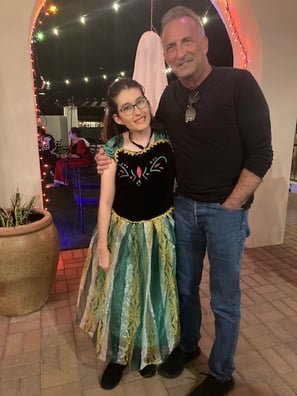
Perhaps the most significant change, however, has been moving to a small, supportive community in another state designed to foster independent living for adults with a wide range of disabilities. Our family made the move together, but after the first 18 months, mom & dad moved out of Emma’s house to our own house 20 minutes away. While that first year brought its share of growing pains, the progress we’ve seen over time has been remarkable. Now, a few years in, it is truly encouraging to watch Emma thrive in this environment.
Another important part of Emma’s journey has been her involvement in research. She has participated in two clinical trials and has taken great pride in contributing to work that may benefit what she calls “all her friends with PWS.” Emma has a strong sense of identity and community, and she embraces the idea that her participation might help others like her. Of course, she is also eager to try things that will help her as well. But research participation is not without its challenges. There are uncertainties about whether a treatment will work, potential side effects, or whether it will ever become widely available. And some parts are no fun, like blood draws and having to provide a urine sample on command.
We were fortunate that she was able to participate in the DESTINY (DCCR) clinical trial that ultimately contributed to FDA approval of a medication for PWS-related hyperphagia. She has now been on this medication for several years, and in her case, it has supported her in gaining greater independence.
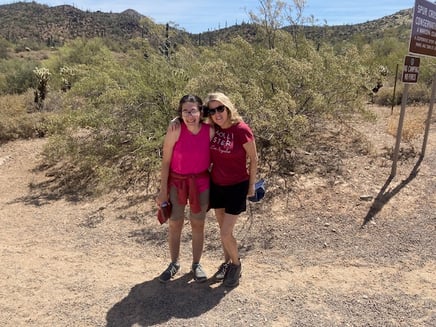
Emma still benefits from a strong support system. Caregivers, and of course, her parents, continue to help supervise her food intake and meal planning. But what has changed is her sense of ownership of her health and, in particular, her daily food plan and commitment to daily exercise. With some support, she does her meal and calorie count planning and makes a plan for her daily exercise. She will also take the lead on suggesting adjustments in calories or exercise to account for special occasions, like enjoying a treat at a birthday party in her community. She even seems to be more flexible when making these choices and adjustments.
These routines, along with the support of her caregivers, have helped her establish a rhythm that works for her. And while the phone calls to mom are still part of daily life, they tend to be shorter now and more about sharing updates than solving daily crises. What stands out is her growth. Emma has matured into a young woman who takes pride in her independence, and we are proud of her.
 Looking ahead, we are exploring new opportunities, including joining a local theatre group that focuses on actors with disabilities. With friends already involved, we are excited to see her creativity and confidence continue to grow in this space.
When I think back to the early days after her diagnosis, I remember reading stories that filled me with fear about what the future might hold. And while Emma’s life does not look like what I once imagined before her diagnosis, it also does not reflect those fears. Instead, it reflects something more real, a life shaped by resilience, adaptation, and some unexpected joys.
Emma continues to teach us about acceptance, about living in the present, and about the importance of adjusting expectations and redefining success. Her journey reminds me that life rarely (and almost never!) unfolds exactly as planned, but that does not mean it cannot be full and rewarding.
As for me, continuing my work with the research team at FPWR has been both meaningful and motivating. It is one way I can contribute to a future where PWS presents fewer barriers; not just for Emma, but for all of her friends with PWS, the ones she knows and the ones she hasn’t met yet. And I am grateful to be part of the work that FPWR is focused on every day.