When you’re caring for someone with Prader-Willi syndrome (PWS), you become an expert at navigating complex medical and behavioral needs. But even with the best care, emergencies can still happen.
A new study, funded by FPWR and led by Dr. James Luccarelli, examines why individuals with PWS visit the emergency department and what happens when they do.
How common are visits to the Emergency Department for people with PWS?
This study used a large database of emergency department (ED) visits, the National Emergency Department Sample, which represents more than 80% of ED visits across the US.
 From a total of more than 250 million ED visits over a two-year period (2019-2021), the study identified about 8,100 emergency visits involving people with PWS —a reminder of how rare the condition is overall (about 1 in every 35,000 ED visits).
But when individuals with PWS do go to the ED, the situation is often more serious:
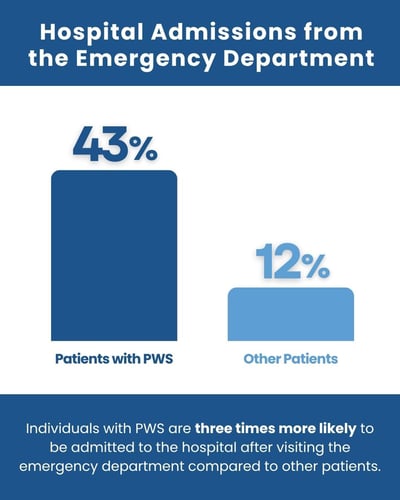
- 43% were admitted to the hospital (compared to about 12% of non-PWS ED patients)
- There was a higher risk of complications and death during these visits
These findings reinforce that medical events in PWS can escalate quickly and often require more intensive care.
The Top Reasons People with PWS Go to the ED
1. Serious infections (especially sepsis)
One of the most common reasons for ED visits was septicemia (sepsis)—a life-threatening response to infection.
Individuals with PWS may be more prone to infections, such as skin infections that can develop from skin picking, which can progress rapidly if not treated early.
2. Breathing and respiratory problems
Respiratory issues were another major driver of ED visits, including:
- Respiratory failure
- Pneumonia
- Aspiration (food or liquid going into the lungs)
These challenges are more common in PWS due to underlying differences in muscle tone, breathing regulation, and swallowing function.
3. Behavioral and psychiatric crises
Behavior-related emergencies are a significant reason for ED visits.
The study found much higher rates of:
- Agitation and severe irritability
- Impulse-control and conduct-related behaviors
When behaviors escalate beyond what can be safely managed at home, the ED may become the only available option, even though it may not be ideally suited for individuals with neurodevelopmental conditions. ED staff may not be familiar with PWS, making these visits especially difficult.
4. Hormonal and metabolic complications
PWS-related endocrine issues also contribute to ED visits, including:
- Diabetes complications
- Electrolyte imbalances (fluid and salt levels)
These issues become more common with age and require close monitoring.
5. Gastrointestinal and feeding-related issues
Especially in younger children, ED visits were often related to:
- Feeding tube (G-tube) complications
- Digestive issues like abdominal pain or obstruction
How Risks Change with Age
The study also showed that reasons for ED visits shift over time:
- Young children (0–4):
Feeding tube and digestive complications - Children & teens:
Diabetes complications and behavioral challenges - Adults:
Infections (especially sepsis), skin infections, and respiratory issues
What You Can Do
While not all emergencies can be prevented, this research highlights areas where proactive care can make a meaningful difference:
- Take infections seriously and seek care early,
- Monitor changes in breathing,
- Stay on top of metabolic health, such as diabetes,
- Have a behavioral crisis plan in place,
- Keep a medical summary on hand
If your loved one with PWS does need emergency care, it’s important to remember that many ED physicians and staff may only encounter PWS once or twice in their entire career. This limited familiarity can make already complex situations more challenging.
In those moments, caregivers play an essential role. Being prepared to clearly explain PWS-specific needs, advocate for appropriate care, and highlight risks that may not be immediately obvious can help ensure your loved one receives the best possible care.
Some resources available to help educate ED staff about PWS include a 1-page description of Serious Mental Health Symptoms & Altered Mental State in PWS, available from RareCAP, a free, rare disease clinical database, and PWS Medical Issues A-Z available from PWSA|USA.