
Topics: Research
GLWL Research is now recruiting patients for its Phase 2 study to evaluate the efficacy, safety and pharmacokinetics of GLWL-01 in the treatment of patients with Prader-Willi syndrome. The study will compare the effects of GLWL-01 on hyperphagia as c...
Researchers throughout the world are hard at work trying to identify the biological mechanism(s) that drive hyperphagia (excessive eating) in PWS. One of these scientists is Dr. Alexander Nectow at Princeton Univeristy. Dr. Nectow's group studies a r...
Topics: Research
FPWR–funded researcher Dr. David Godler, of Murdoch Children’s Research Institute and University of Melbourne in Australia, was recently awarded nearly $500,000 AUD from the Turnbull Government’s Medical Research Future Fund (MRFF). The award funds a...
Topics: Research

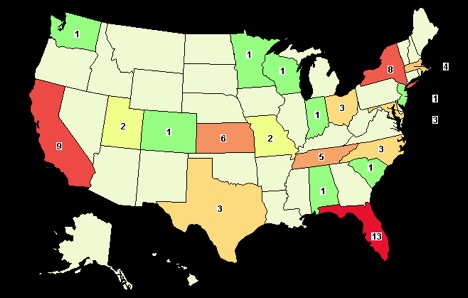
When it comes to fundraising for PWS research, I've got good news, and I've got good news: First, in 2017, our community raised $3,200,000 for PWS research! Thanks to everyone who fundraised or supported a fundraiser, last year FPWR funded 18 researc...
Topics: News
Please join me in welcoming FPWR's newest team member, Chief Executive Officer John Walter! Walter has dedicated his entire professional career to the non-profit sector, with over 30 years of experience in the field. Former CEO of the Leukemia and Ly...
Topics: News
There are numerous efforts in the healthcare community to increase health care accessibility, education, and support. One of these approaches is “telehealth”, the use of telecommunications methods such as computers and phones to deliver health relate...
Topics: Research
The number of clinical trials for PWS continues to increase at a rapid pace. In 2017, clinicaltrials.gov listed 13 PWS clinical trials, compared with only two trials 10 years ago. With the increase in PWS clinical trials, our community is presented w...
Topics: Research
The PWS-Clinical Trial Consortium (PWS-CTC) combines the expertise and perspective from multiple disciplines and stakeholders, bringing together members of academia, industry, and patient organizations from around the world in order to address the un...
Topics: Research
Of the genes on chromosome 15 that are missing or inactivated in PWS, the SNORD116 gene cluster is known to be critical. But it's still unclear how disruption of SNORD116 contributes to the symptoms of PWS. In a new study funded by FPWR, Dr. Deborah ...
Topics: Research