Families living with Prader-Willi syndrome are changing how PWS is understood, studied, and treated.
In a recent episode of the PWS United podcast, members of FPWR’s research team shared how ten years of family participation in the Global PWS Registry is shaping better care, accelerating research, and preparing the community for a new era of treatment.
The conversation, hosted by PWSA-USA’s Stacy Ward and Lynn Garrick, featured Theresa Strong, PhD, FPWR’s Director of Research Programs; Jessica Bohonowych, PhD, Associate Director of Research Programs and a key developer of the registry; and Lisa Matesevac, AuD, Study Coordinator and Registry Administrator.
One message came through clearly.
The registry is not just a database. It is a driver of real-world change.
What is the Global PWS Registry? 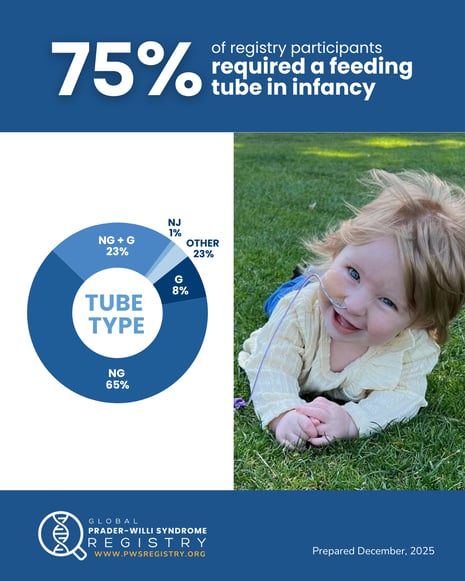
The Global PWS Registry is a secure platform where caregivers share real-world information about life with Prader-Willi syndrome. Over time, that caregiver-reported data reveal patterns researchers and clinicians cannot see through traditional research or clinical care alone.
That data is already changing care.
For example, findings from hundreds of families showed higher complication rates in infants with PWS who received G-tubes compared to NG tubes, helping clinicians and families weigh feeding options more carefully in the NICU.
What families shared years ago is helping guide care decisions for newborns today.
"Sharing your personal experience can be very empowering. It’s a way to give back and help the entire community,” said Lisa.
Capturing the Full Spectrum of PWS
Life with PWS looks different across ages, living situations, medical needs, and stages of life.
The Global PWS Registry brings together data across the PWS community, allowing researchers to see patterns that cannot be identified through individual studies or clinic visits alone.
As Jessica put it, “PWS is a big puzzle, and every single piece helps put the whole picture into focus.”
By capturing both challenges and areas of stability, registry data helps researchers and clinicians understand the full range of PWS symptoms and how they change over time.
Even when clinical trials aren’t an option due to age, location, or eligibility, the registry ensures that families across ages and circumstances can still contribute to research.
What’s new in Registry 2.0?
With the approval of Vykat XR, the first FDA-approved medication for hyperphagia in PWS, families and clinicians are entering new territory. Questions are emerging about how the medication works in everyday life and what that experience looks like over time.
To help answer those questions, the Global PWS Registry 2.0 includes a dedicated Vykat XR module. This new component allows families to share real-world experiences with treatment, capturing how it affects daily life, access, and safety beyond the controlled setting of a clinical trial.
“Post-approval data is essential to ensure therapies are used safely, equitably, and effectively,” explained Theresa.
In addition to the new Vykat module, the registry has also been updated to be easier to use and more accessible. The new platform supports multiple languages and makes it easier for families to participate from their phones or other mobile devices.
Built by families, guided by experts
The Global PWS Registry is overseen by FPWR’s research team and guided by a governance board that includes clinicians, researchers, advocacy organizations, and parents. It is approved by an institutional review board (IRB) and designed to protect privacy while ensuring data is used responsibly to advance meaningful research.
Families can complete surveys at their own pace and update information over time. While participation is designed to be accessible and family-friendly, the data itself is collected and managed within a confidential, research-approved framework. Registry findings are published in open-access journals, making it easier for families to share evidence with their care teams and advocate for better care.
This structure is what sets the registry apart from informal sharing on social media. Registry data is collected securely and analyzed responsibly, allowing lived experiences to inform care, policy, and access.
Without robust registry data, promising treatments risk being misunderstood or unevenly accessible. With it, families, providers, researchers, and regulators can make decisions grounded in real-world experience.
Why participation matters
Progress in PWS research depends on families sharing their experiences and researchers using that knowledge to guide better decisions.
The Global PWS Registry puts that collaboration into action. It turns lived experience into evidence that improves care, informs treatment decisions, and helps families and clinicians make safer, more informed choices.
As FPWR continues to invest in registry-driven research, one thing remains true:
participation fuels progress, and progress changes lives.
FPWR is grateful to PWSA-USA for hosting FPWR on the PWS United podcast and for helping elevate conversations that move the entire PWS community forward. Listen to the full episode here.